OpenAI’s Agentic AI Drive and IPO Potential
– 3 min read
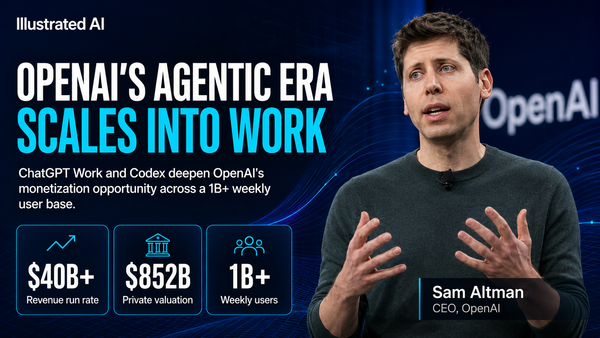
AI has evolved from a question-answering novelty into an active work platform. Where chatbots once handled isolated queries, agentic AI now moves across tools like email, Slack, Notion, and Figma to complete multi-step tasks autonomously. This shift transforms AI from a clever product into operating infrastructure for businesses.
Invest in top private AI companies before IPO, via a Swiss platform:
 SmartProfit Finder AG
The commercial implications are significant. A platform that completes work rather than merely discussing it commands stronger willingness to pay, deeper workflow integration, and genuine switching costs. Once habits form and team systems connect, the product becomes difficult to dislodge — creating defensive value that pure chatbots cannot match.
The core rule: when AI starts completing work instead of just discussing it, the revenue opportunity becomes much larger.
More than one billion people use ChatGPT globally signals that AI has moved beyond early adopters into everyday life. That scale creates an invaluable asset: an enormous installed base from which to monetize. Free users build habits, premium subscribers generate revenue, and enterprise customers scale spending rapidly across teams.
Scale also accelerates product learning, lowers customer acquisition costs, and raises competitive barriers. Users who build routines around a familiar platform are unlikely to switch unless an alternative is dramatically superior. When new agentic features launch, they reach a billion potential adopters immediately — removing the need to build demand from scratch.
For investors: Once a platform reaches more than a billion users, each new feature has access to an exceptionally large existing audience, creating significant potential for adoption and monetization.
An annualized revenue run rate above $40 billion confirms that AI demand has reached industrial scale. This matters because it demonstrates users are paying repeatedly, not just experimenting. Recurring subscription and enterprise revenue provides visibility and funds the substantial ongoing investment in computing, research, and infrastructure that advanced AI requires.
Crucially, this momentum appears to precede the full maturity of the agent strategy. As AI moves up the value chain from answering questions to executing tasks, monetization logic strengthens further. Pricing power grows when the service is measurably indispensable rather than occasionally convenient.
The message for investors: AI is already generating revenue at a level that commands serious attention.
Enterprise adoption converts consumer visibility into durable, high-value revenue. Businesses pay for measurable outcomes — faster code, automated workflows, compressed research cycles - and budgets scale when return on investment is clear. A broad ecosystem of conversational tools, coding systems, research capabilities, and APIs gives organizations multiple entry points, deepening relationships over time.
Ecosystem density creates lasting competitive defence. Displacing a platform embedded across research, coding, and workflow automation is far harder than beating a single feature benchmark. Coding products are particularly strategic, embedding AI into the decisions of technical leaders who influence broader enterprise adoption.
The investor takeaway: consumer popularity starts the story, but enterprise integration and ecosystem depth turn a hot product into a lasting technology powerhouse.
A private-market valuation of $852 billion places this company in rare territory, implying investors already see the outline of a future mega-cap platform. At that level, proving the business is real is insufficient — it must demonstrate broad, durable, and expanding profit opportunities as agentic AI becomes standard in professional life.
A future IPO would widen access but introduce relentless quarterly scrutiny. Key signals to watch include enterprise revenue mix, monetization per active user, workflow adoption depth, and the ability to scale ambition without losing execution discipline. If the platform becomes a central operating layer for knowledge work, the strategic opportunity could be substantial; the risk lies in growth slowing or fragmenting before matching already elevated expectations.
The final investor lens: when a company is valued like a future giant, every product launch, revenue milestone, and enterprise win becomes evidence in a much bigger case.