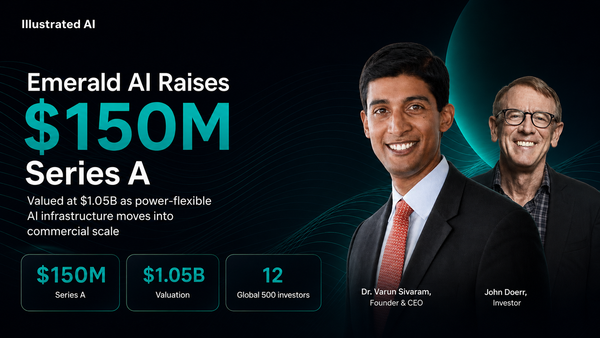
Emerald AI Funding Highlights Power-Flexible Data Centers
– 4 min read
The race to build more AI has collided with an old reality: electricity does not appear by magic. Chips can be designed and capital raised in spectacular amounts, but none of it matters without sufficient power. What once looked like a pure software revolution is increasingly becoming a power story.
Invest in top private AI companies before IPO, via a Swiss platform:
 SmartProfit Finder AG
Data centers are enormous, always-hungry industrial machines. As AI workloads expand, these facilities need electricity at scales rivaling towns. The problem is not just the amount needed, but when, where, and how quickly they expect grid connection. Transmission projects take years. Utility planning moves far slower than venture capital. AI companies want to grow now. This mismatch between digital speed and physical infrastructure is one of the defining tensions of the age.
Electricity is no longer a background operating cost. It is becoming a strategic asset and limitation. If AI is the engine of the new economy, electricity is the fuel line. A brilliant engine with a blocked fuel line goes nowhere.
The old data center model was simple: consume power constantly and demand reliability above all else. That arrangement worked when digital growth was manageable. It breaks down when AI sharply increases demand.
The breakthrough idea behind grid-flexible AI infrastructure is easy to understand. Software helps data centers adapt energy use in response to grid conditions, intelligently adjusting when certain computing tasks run so facilities can reduce strain during tight periods without sacrificing critical work. Think of it like traffic management: some flows are rerouted, some trips slightly delayed, but emergency services always get through.
This software-first approach avoids the enormous delays of building new physical infrastructure. By orchestrating power usage more intelligently, it extracts greater value from infrastructure already in place, making data centers active participants in grid stability rather than passive power users. When one innovation creates value across an entire ecosystem, it attracts attention fast.
When a young company raises a large round above a billion-dollar valuation, the deeper story is not the size alone. Sophisticated investors are declaring that power flexibility is moving toward the core of the AI infrastructure stack, sitting between computational demand and physical energy supply.
The presence of both financial and strategic investors signals that the opportunity resonates across multiple commercial landscapes. Large corporations do not engage with emerging infrastructure themes purely for excitement. They pay attention when a problem is real, expensive, and likely to intensify.
This funding event resets expectations for an entire segment. It tells the market that software coordinating compute and power is no longer fringe. It is becoming investable. Capital does not just fund growth. It legitimizes a market. The investment community appears to be repricing the importance of electricity-aware computing, and when that happens, the story has already moved well beyond novelty.
Real credibility begins when technology leaves demonstration and enters live commercial operation. Multi-megawatt, full-data-center-scale deployment matters because that is the language of serious infrastructure, proving the software works where stakes are high and failure is costly.
Flexible demand could unlock vast capacity on the existing grid. A grid is limited not just by total generation but by timing, congestion, and the challenge of balancing supply and demand moment by moment. Unlocking existing capacity is like finding extra highway lanes without rebuilding the entire road network first. It creates breathing space and accelerates growth while future construction catches up.
For AI companies, faster power access means faster product cycles and stronger market positioning. For utilities, flexible load offers a new way to manage peak demand, transforming data centers from burdens into controllable partners that help stabilize the network. If software can reveal hidden capacity inside the grid, it may be opening one of the biggest near-term pathways for AI expansion.
The bold vision is easy to admire. The harder question is whether it can scale across markets, regulations, and customer needs to become standard practice rather than an interesting exception.
Operators need confidence that flexibility will not undermine core business, requiring the system to identify critical workloads and manage power changes without operational chaos. Utilities need verifiable, dependable responses before offering incentives or planning advantages. Economics must be attractive to both sides. Regulation adds another layer of complexity, as power systems are local, heavily governed, and slow to change.
The long-term significance will depend on whether grid flexibility can become a repeatable operating standard across utilities and data centers, shaping how future AI infrastructure is planned and deployed. It influences how customers design facilities, how utilities think about large loads, and how investors understand the economics of growth. As long as AI demand keeps climbing, solutions that improve power access become more relevant, not less.
The future test is brutally simple: can flexibility become normal? If the answer is yes, the rules of AI infrastructure may have already changed.