Apptronik Secondary Sale Highlights Humanoid Robotics Momentum
– 4 min read
When investors buy existing shares in a private robotics company rather than waiting for a new fundraising round, it suggests that interest has moved beyond early curiosity. A secondary share sale means one investor purchases shares from an existing shareholder rather than from the company itself. Although the business receives no new capital, these transactions are generally viewed as a sign of growing investor confidence in its long-term commercial prospects.
Invest in top private AI companies before IPO, via a Swiss platform:
 SmartProfit Finder AG
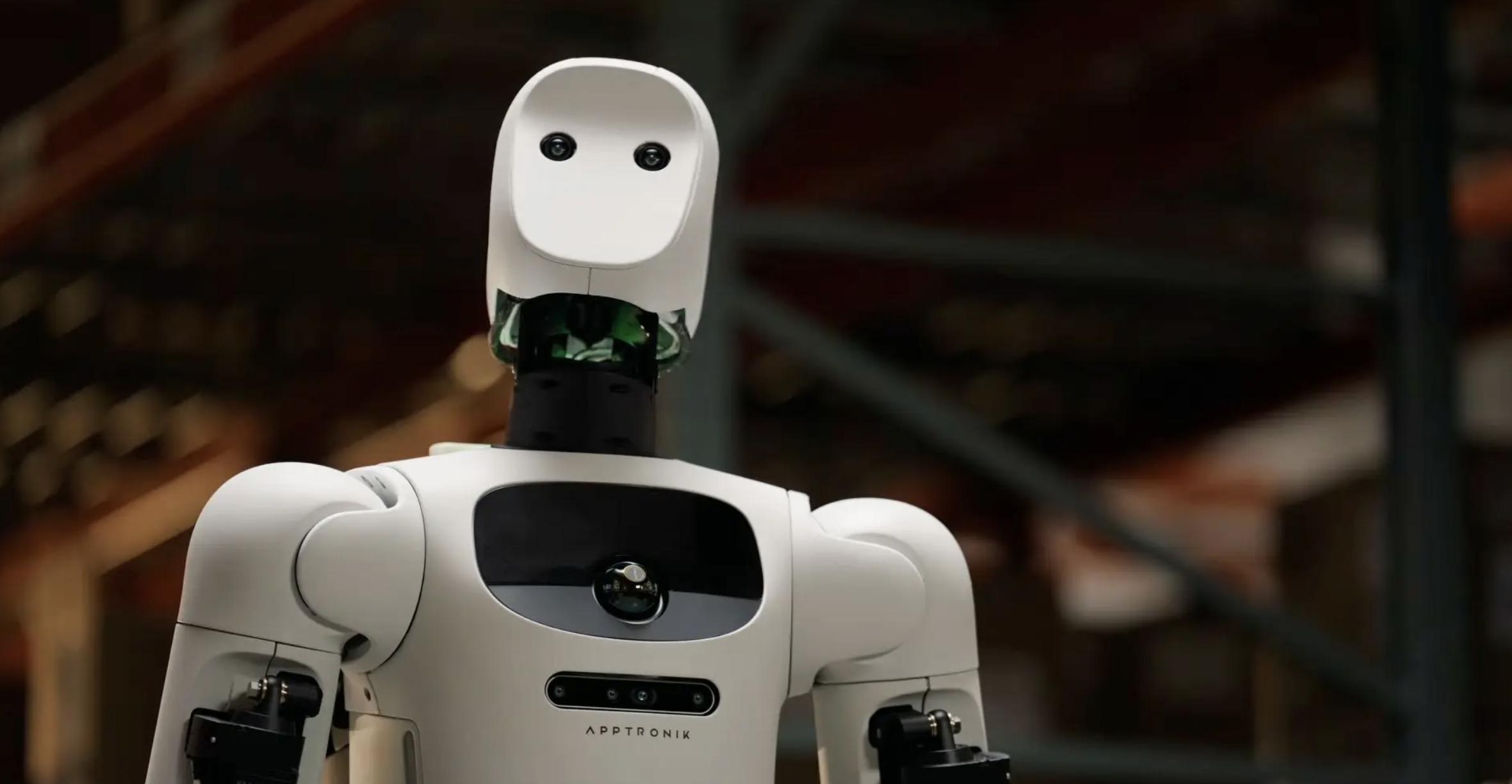
Humanoid robotics once attracted attention primarily as an experimental technology. That perception is evolving as advances in artificial intelligence, sensors, motion control, and battery systems bring these machines closer to practical commercial deployment. Investors are increasingly focused on identifying the companies with the strongest engineering capabilities, technical talent, and ability to convert innovation into sustainable revenue. Competition for ownership often reflects a transition from technological curiosity to commercial relevance.
Most workplaces and homes were designed around human movement and interaction. Traditional industrial robots perform exceptionally well in repetitive, highly structured environments but are typically limited to specialized tasks. Humanoid robots pursue a different objective: operating within existing spaces while adapting to a broader range of activities, whether in warehouses, factories, healthcare facilities, or eventually private homes.
Artificial intelligence is the enabling technology behind this transition, allowing robots to interpret their surroundings, recognize objects, and make increasingly sophisticated decisions in real time. Progress in computing power, sensors, machine learning, and mechanical engineering is expanding the range of tasks these systems can perform reliably. Success would extend well beyond a single application, creating opportunities across manufacturing, logistics, healthcare, and other labor-intensive industries.
A flagship robot represents only the visible part of a broader technology platform. The long-term value lies in software, control systems, learning capabilities, and hardware architecture that can be refined and reused across multiple deployments. Each operating environment generates new data, strengthens performance, and improves future deployments. Over time, the platform benefits from cumulative learning, customer relationships, and operational experience.
Strategic sequencing also matters. Focusing first on manufacturing and logistics, where the economic case is easiest to demonstrate, allows companies to build operational credibility, improve products, and generate recurring revenue before expanding into more complex industries such as healthcare. As hardware costs decline and software capabilities improve, the commercial opportunity expands accordingly. Companies that establish strong early positions within a product category often benefit from reinforcing advantages, creating a self-reinforcing cycle of product improvement, customer adoption, and operational scale. The greatest long-term opportunity lies not in selling a single robot, but in building a platform that can expand across multiple industries.
A robotics company emerging from a leading university laboratory brings years of research experience before becoming a commercial enterprise. Such organizations often benefit from deep expertise across mechanical engineering, artificial intelligence, perception systems, controls, and safety—disciplines that must function together to build successful humanoid robots.
As these companies expand, their ability to attract and retain highly specialized engineers becomes an increasingly important competitive advantage. Experts in embodied AI, robotics software, mechanical design, and large-scale deployment remain scarce. Building teams with this combination of expertise creates capabilities that are difficult to replicate through capital investment alone.
Workforce growth also reflects increasing execution capacity rather than research alone. Companies emerging from research environments often benefit from cultures focused on long-term technical development and experimentation while gradually building the manufacturing discipline, reliability standards, and commercial capabilities required for large-scale deployment.
The most significant technological shifts often redefine how businesses organize work rather than simply improving existing processes. In manufacturing, humanoid robots may extend automation beyond highly specialized production lines. In logistics, they could help address labor shortages, improve operational flexibility, and support growing e-commerce demand. In healthcare, they may assist with physically demanding support tasks, allowing skilled professionals to focus on higher-value patient care. Home assistance remains a longer-term opportunity but represents an additional avenue for future expansion.
Many economies face aging populations, labor shortages, and rising wage pressures in physically demanding occupations. Humanoid robotics could gradually extend automation into environments that have historically been too complex for conventional industrial robots. Productivity growth has consistently been one of the primary drivers of long-term economic development, and advances in robotics may contribute to the next phase of that trend. Investors increasingly recognize that humanoid robotics could reshape labor-intensive industries over the coming decade, provided companies can demonstrate reliable execution, sustainable economics, and consistent commercial adoption.