Anthropic’s $10 Billion AI Computing Deal
– 3 min read

AI development is increasingly constrained by access to computing power. Training and operating advanced models requires specialized chips, large data centers, reliable electricity, and long-term infrastructure agreements. As demand grows, computing capacity is becoming one of the most important strategic resources in the AI industry.
Invest in top private AI companies before IPO, via a Swiss platform:
 SmartProfit Finder AG
AI companies cannot scale on software innovation alone. Even the most capable models depend on sufficient hardware and infrastructure to train, improve, and serve customers reliably. Companies that secure long-term access to high-performance computing resources may therefore gain a lasting competitive advantage as the market expands.
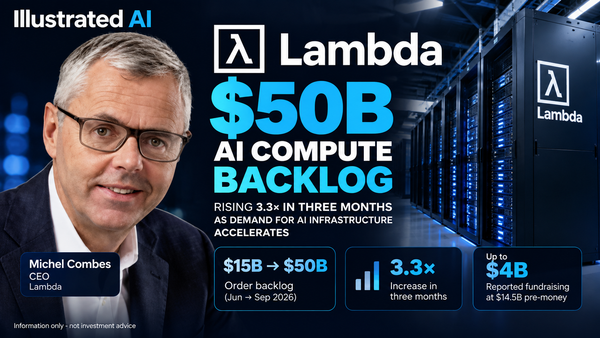
Rapid growth in AI demand is creating opportunities for specialized infrastructure providers. Established cloud companies remain central to the market, but frontier developers increasingly seek guaranteed access to capacity that can support large-scale training and inference workloads.
A startup that secures a major compute contract can quickly strengthen its market position by improving credibility with customers, lenders, suppliers, and potential employees. Specialized providers may also move faster in designing data centers around dense AI workloads, tailored energy requirements, and the operational needs of demanding customers.
These companies still face significant execution risks, including construction delays, hardware availability, customer concentration, and high capital requirements. However, specialized infrastructure may provide an advantage in markets where customers prioritize speed, reliability, and guaranteed capacity.
Artificial intelligence may appear digital, but the infrastructure supporting it depends heavily on physical resources. Data centers consume substantial amounts of electricity, generate significant heat, and require reliable land, cooling systems, and network connectivity. Norway offers several characteristics that can support large-scale AI infrastructure, including abundant power, a cooler climate, and a stable industrial environment.
Energy availability is becoming an increasingly important factor in AI deployment. Growth in compute demand may benefit not only semiconductor and cloud companies, but also utilities, transmission networks, data-center operators, and regions capable of supporting large infrastructure projects.
The next phase of AI competition may depend as much on access to reliable and affordable energy as on software innovation. Geography is therefore becoming an important component of long-term infrastructure strategy.
Advanced AI development depends on an interconnected ecosystem of semiconductor suppliers, networking technologies, data-center operators, and infrastructure partners. Model developers increasingly rely on these relationships to secure the computing resources required to scale their products.
Strategic partnerships can shorten deployment timelines by giving AI companies access to infrastructure that would otherwise take years to build independently. They can also improve supply visibility and reduce operational uncertainty as demand grows. In this environment, speed of deployment has become a meaningful competitive advantage.
Competition in AI increasingly resembles competition between interconnected ecosystems rather than individual companies. The ability to coordinate hardware, infrastructure, software, and financing may become an important source of long-term differentiation.
Advanced AI remains highly capital intensive. Building and operating large-scale infrastructure requires sustained spending on chips, data centers, electricity, and technical operations. Companies with stronger access to capital can secure computing resources earlier, expand capacity faster, and continue investing through periods of market volatility.
Public markets may become increasingly important as infrastructure requirements grow beyond what private financing can comfortably support. A public listing can broaden access to capital, but it also increases scrutiny around margins, cash flow, capital efficiency, and the path to sustainable profitability. Large spending commitments alone do not guarantee competitive success.
For investors, the key question is whether companies can convert infrastructure investment into durable revenue and attractive long-term returns. The firms that combine reliable access to compute, disciplined capital allocation, and strong customer demand may be better positioned to shape the next phase of AI development.