Warhound’s $200M Bet on Genetically Enhanced Working Dogs
– 3 min read
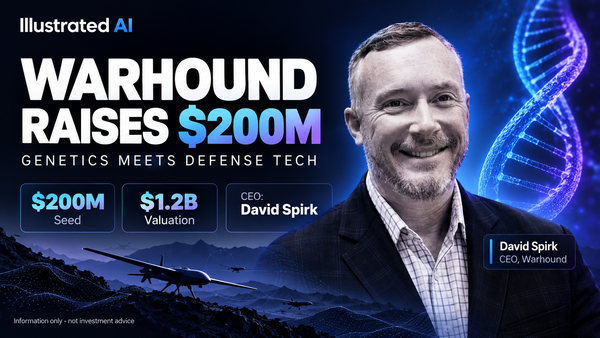
Warhound emerged from stealth on 22 October 2026, announcing $200 million in seed funding. Axios reported a $1.2 billion post-money valuation. The company plans to combine genetics, cloning, training and Anduril equipment to develop working dogs. The financing establishes investor backing, rather than demonstrated animal performance or commercial readiness.
Invest in top private AI companies before IPO, via a Swiss platform:
 SmartProfit Finder AG

Working dogs have long served military, law enforcement, and emergency response. They detect scents machines still struggle to match, navigate difficult terrain, and build handler trust no robot fully replicates. Yet sourcing and training these animals has always been expensive and uncertain. This startup's thesis is that biology can be made more reliable — turning unpredictability into optimization through a repeatable production pipeline.
The Wall Street Journal reported that Warhound expects its first puppies in the first quarter of 2027. This is a projected birth milestone, rather than a delivery or operational-readiness date. Health, training outcomes and suitability for service would still require evaluation.
Warhound plans to combine genetic screening, gene editing, biobanking and cloning with training and animal care. Its objective is healthier working dogs with suitable operational characteristics. The announcement does not demonstrate that cloning reproduces a donor animal’s abilities or that proposed genetic changes reliably improve health, scent detection or temperament.
Anduril is a technology partner for protective equipment, software and situational awareness. The reviewed disclosures do not establish validated measurement of stress, stamina or training progress.
The platform logic excites investors because value extends across the entire lifecycle: animal development, training, hardware, software, monitoring, and replacement. An integrated offering could combine animals, training, equipment and ongoing support, but pricing, contractual performance commitments and recurring revenue remain to be demonstrated.
Target buyers include military, law-enforcement, and emergency-response organizations — institutions that pay premiums when performance advantages are meaningful and dependable. The pitch addresses real pain: working dogs are difficult to source, expensive to train, and inconsistent in quality. A company promising stronger health profiles, more predictable aptitudes, and integrated hardware support could command premium pricing from buyers focused on mission impact over sticker price.
Success with demanding institutional customers also creates reputational momentum, signaling credibility to broader markets. Beyond animals, the company could deliver complete capability packages covering selection, certification, monitoring, handler support, and replacement planning.
However, purchasing economics, unit pricing, and margins remain undisclosed. Assumptions are not revenue. The company also competes against improving robotics and drone alternatives — it must prove not just that its offering is good, but that it is the best answer among several emerging options.
The founding concept is associated with Ben Lamm, linked to advanced genetics through Colossal, and Palmer Luckey, known for defense technology through Anduril — frontier biology meeting national-security hardware thinking. CEO David Spirk, a former Pentagon chief data officer, brings crucial institutional procurement knowledge. Reported backers include Sequoia, 8VC, and In-Q-Tel.
Notably, Luckey carries no equity while Colossal holds a stake — a distinction worth understanding. Public association can suggest unified ownership when real alignment is more selective. Signal is a clue, not a conclusion. A prominent founder does not guarantee operational success; a famous investor does not validate product-market fit.
Execution risks are substantial. The company must demonstrate reproducible health and capability improvements across meaningful animal populations, not isolated standouts. It must prove safe practices — animal welfare will be central to public and customer acceptance alike. Handler trust matters too; trainers may have strong views about temperament that data alone cannot address.
Key milestones that would shift the narrative from possibility to substance include: independently verified animal health and training results; evidence of operational product readiness; signed commercial or government contracts; disclosed unit economics; and transparent welfare standards.
Each milestone narrows uncertainty. Each step moves the company from bold possibility toward investable substance.
The bottom line: Warhound’s financing supports an ambitious working-dog development programme. It does not establish improved animal health, dependable operational performance or profitable economics. Investors should watch independently assessed health and welfare outcomes, training completion rates, customer contracts, equipment validation and lifetime support costs.