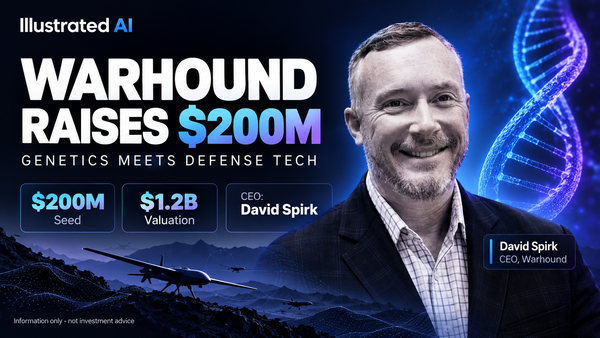
Warhound: Gene-Engineered Military Dogs Meet Defense Tech
– 3 min read
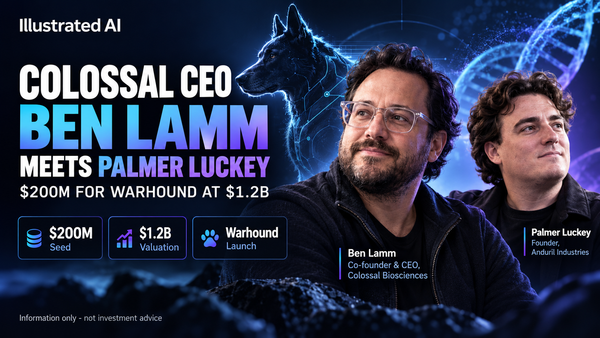
The Wall Street Journal reported that the first puppies are expected in the first quarter of 2027. Births would be an initial development milestone, rather than evidence of completed training or readiness for service.
Invest in top private AI companies before IPO, via a Swiss platform:
 SmartProfit Finder AG

Working dogs remain irreplaceable where machines still struggle—navigating chaos, detecting hidden threats, and operating alongside human handlers in ways robots cannot replicate. Yet elite dogs are scarce, training is demanding, and performance standards are high. Warhound aims to rethink this entire pipeline.
The central bet: if genetics influence health and stamina, better biological tools may improve the odds of producing animals built for demanding work. This isn't about instant super-dogs—it's about improving baseline probabilities. The valuation reflects hope, not a long record of delivery. That's how many disruptive stories begin.
Warhound plans to draw on Colossal’s genetics and biobanking capabilities, alongside cloning, training and animal care. This does not establish that Warhound itself operates a licensable biotechnology platform or has multiple proven revenue streams.
AI could support genomic analysis, but the reviewed disclosures do not establish a validated Warhound-specific AI contribution to animal health or performance.
If proven, this platform could create a category few others can replicate. If improvements are minor or unconvincing, the story weakens fast. The act of changing the question is itself disruptive: the market is no longer asking only who trains the best dogs—it's asking who can engineer the best biological starting point.
Anduril is a technology partner for protective equipment, software and situational awareness. The proposed integration could support dogs and handlers, but field reliability, safety benefits and operational effectiveness require testing. The reviewed disclosures do not establish superior performance relative to robotic alternatives across operating conditions.
Combining animals, equipment and ongoing support could create recurring revenue opportunities. Whether these produce durable customer relationships and attractive margins will depend on contract terms, repeat demand, equipment reliability and lifetime support costs.
CEO David Spirk, former Pentagon chief data officer, signals the venture's intent to bridge advanced technology with institutional credibility. Defense markets aren't won by ambition alone—they demand familiarity with procurement, mission requirements, and operational trust.
According to Ben Lamm’s account reported by TechCrunch, Colossal holds equity and licenses technology to Warhound, while Palmer Luckey holds no equity. The full licensing economics and governance rights have not been disclosed, so operational control should not be inferred from those relationships alone.
The right investor question isn't whether famous people are involved. It's whether the venture can convert elite relationships into durable commercial traction—with clear technology transfer, aligned incentives, and leadership that understands how institutional buyers actually purchase.
The venture now enters the stage where markets stop rewarding imagination and start demanding evidence. First checkpoints are biological: healthy animals, stable welfare outcomes, and development that is sound, repeatable, and responsibly managed. Without this foundation, no broader thesis matters.
Then comes measurement. Independently credible evidence around health, stamina, trainability, and mission performance must be statistically meaningful and consistently reproducible. Animal welfare oversight isn't a public-relations accessory—it's part of the business model. Institutional customers and the wider public will both pay attention.
Procurement remains the graveyard of many ambitious technologies. Impressive products still fail if certification, contracting, and budget processes become obstacles. Economics must also work: exceptional dogs that are too expensive or too inconsistent to supply reliably don't create scalable commercial value.
The bottom line: Warhound’s financing supports a proposed working-dog development programme. It does not establish improved health, dependable operational performance or profitable recurring revenue. Investors should watch animal welfare and health outcomes, training completion, independently assessed performance, customer contracts and lifetime support costs.