Agility Robotics’ $2.5 Billion SPAC Path to the Public Market
– 3 min read
Humanoid robots are beginning to enter commercial warehouses, factories, and logistics centers, reflecting growing demand for automation that can operate within environments designed for people. Unlike traditional industrial robots confined to highly structured work cells, humanoid systems can navigate existing aisles, shelves, and workflows without requiring major infrastructure redesign, improving the economics of automation.
Invest in top private AI companies before IPO, via a Swiss platform:
 SmartProfit Finder AG
Warehouses and manufacturing facilities rely on workers to perform repetitive, physically demanding tasks such as moving bins, stacking containers, and transporting materials. A robot capable of performing these jobs consistently can reduce labor constraints while improving operational efficiency. Recent advances in robotics are helping narrow the gap between laboratory demonstrations and practical commercial deployment, driven by growing pressure to improve supply-chain resilience, address labor shortages, and increase productivity.
Agility Robotics is entering public markets through a SPAC merger, providing faster access to growth capital while establishing one of the first publicly traded companies focused primarily on humanoid robotics. The approximately $2.5 billion valuation reflects investor expectations that the company could participate in a much broader industrial automation opportunity rather than serving a niche hardware market.
Public-market access provides additional capital, increases visibility among enterprise customers, and broadens the company's access to institutional investors. Large organizations typically prefer financially stable suppliers when integrating new technologies into long-term operations. Because relatively few listed companies offer direct exposure to humanoid robotics, the transaction may also attract investors seeking participation in an emerging technology category. Public ownership, however, also brings greater scrutiny, requiring consistent execution, revenue growth, and evidence that commercial adoption is scaling successfully.
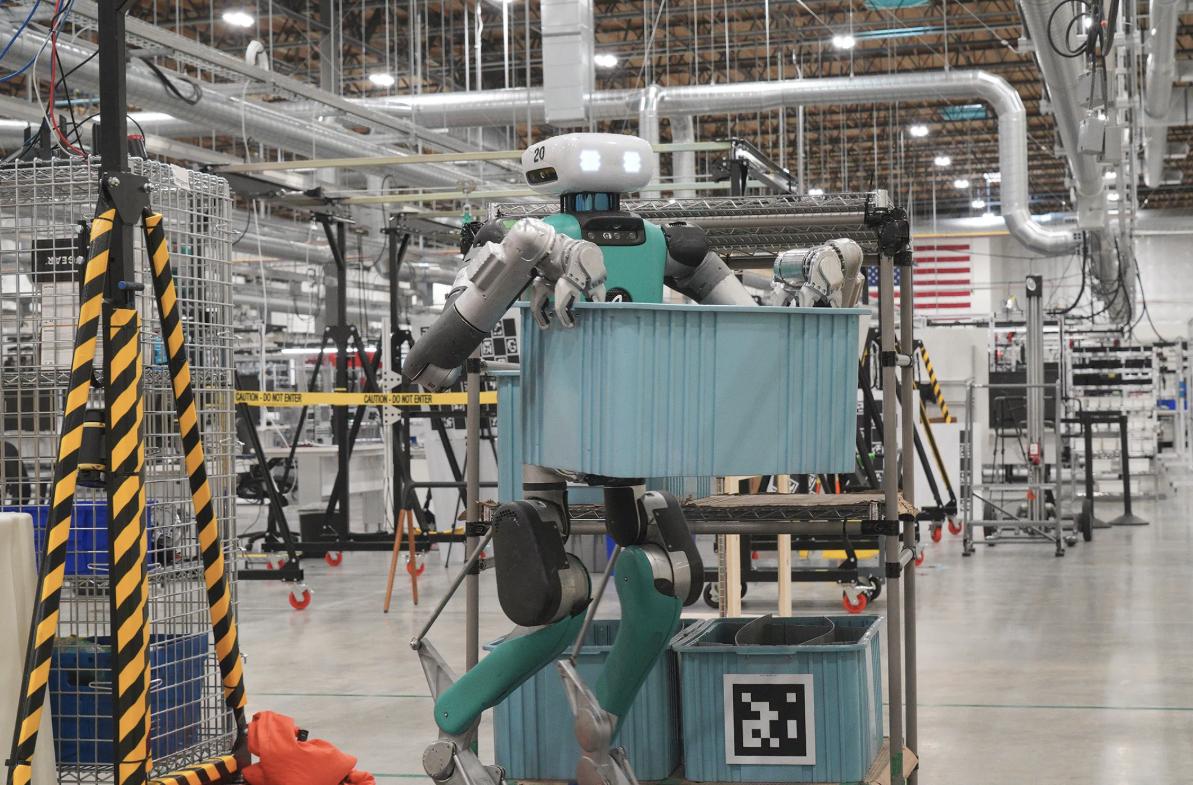
Digit performs repetitive material-handling tasks inside warehouses and manufacturing facilities, including moving and stacking heavy containers. Although these tasks appear straightforward, they represent some of the most labor-intensive and operationally demanding activities within industrial facilities. Reliable automation in these areas can produce measurable productivity improvements while reducing physical strain on workers.
Its humanoid design serves a practical purpose rather than a symbolic one. Existing industrial facilities are already configured around human dimensions and workflows, allowing Digit to integrate without requiring extensive infrastructure changes. Lower implementation complexity can reduce adoption barriers and make automation more attractive for customers seeking incremental improvements rather than complete operational redesigns. As organizations gain confidence through initial deployments, opportunities often expand into additional workflows and facilities.
In emerging technology markets, commercial relationships often provide stronger validation than technical demonstrations alone. Amazon's involvement is particularly significant because its logistics operations demand high levels of efficiency, reliability, and scalability. Successful deployment within both warehouse and manufacturing environments suggests the technology can address a broad range of industrial applications rather than a single specialized use case.
Foxconn contributes manufacturing expertise alongside financial support, helping strengthen the company's ability to scale production and manage complex hardware supply chains. Strategic industry partners can also accelerate commercial adoption by increasing customer confidence, attracting engineering talent, and demonstrating that experienced industrial companies view the technology as commercially relevant. While pilot programs do not guarantee widespread deployment, they provide important evidence that customer demand extends beyond theoretical interest.
Humanoid robotics is developing at the intersection of labor shortages, industrial automation, supply-chain modernization, and artificial intelligence. Many warehouses and factories continue to face persistent challenges recruiting and retaining workers for repetitive physical roles, creating long-term demand for technologies that improve productivity and operational flexibility.
Competition among well-funded companies also suggests growing confidence in the commercial potential of the sector. For investors, the opportunity extends beyond the success of any single robot model. If humanoid systems become widely adopted across industrial environments, the addressable market could expand significantly as companies automate a broader range of physical tasks.
Execution remains the defining factor. Robotics companies must demonstrate reliable deployment, attractive unit economics, scalable manufacturing, and measurable customer returns before long-term investment theses can be fully validated. Businesses capable of consistently delivering operational improvements while expanding production and maintaining technological leadership are likely to establish the strongest competitive positions as humanoid robotics evolves into a larger commercial industry.