“Why AI-Powered Space Data Centers Are Pushing Elon Musk to Take SpaceX Public”
– 4 min read
Artificial intelligence is no longer just a software story confined to Earth. It is increasingly reshaping physical infrastructure and pushing some of the world’s most ambitious technology leaders to look beyond the planet itself. A growing number of industry insiders believe the next frontier for AI may be space, where data centers could eventually operate in orbit rather than on the ground.
Invest in top private AI companies before IPO, via a Swiss platform:
 SmartProfit Finder AG
AI data centers are massive, energy-intensive facilities used to train and run advanced models. On Earth, they face mounting constraints: limited grid capacity, soaring electricity costs, land shortages, and regulatory hurdles. These pressures are driving interest in orbital alternatives, where constant solar exposure and isolation from terrestrial infrastructure limits could offer long-term advantages. Within this context, SpaceX has emerged as a central player exploring how AI computing could extend into space.
The core idea behind orbital AI data centers is simple in theory but extremely complex in execution. Satellites equipped with high-performance computing systems could orbit Earth, drawing continuous solar power while avoiding many of the constraints faced by ground-based facilities. In principle, this would reduce dependence on terrestrial power grids and enable new forms of distributed AI infrastructure.
In practice, the challenges are formidable. High-density computing hardware generates significant heat, and cooling systems that work on Earth do not translate easily to the vacuum of space. Maintenance, fault tolerance, radiation exposure, and long-term reliability all become exponentially harder when servers operate hundreds of kilometers above the planet at orbital speeds. As a result, many engineers remain skeptical that space-based data centers can be made economical or reliable in the near term.
For several years, orbital AI computing was treated inside SpaceX as a long-term research direction rather than an immediate business priority. The company had already been developing elements relevant to this vision, including satellite networking, custom hardware, and distributed computing systems that could support AI workloads in space.
That posture reportedly shifted in the middle of last year as competition in artificial intelligence intensified. As rivals accelerated their investments in AI infrastructure and model training capacity, the strategic value of controlling computing resources — not just models — became more apparent. Within SpaceX, efforts around orbital computing reportedly moved from exploratory to urgent, with increased resources devoted to design, launch feasibility, and system integration.
At the same time, other technology leaders began signaling interest in similar concepts, raising the stakes around who might define the next generation of AI infrastructure.
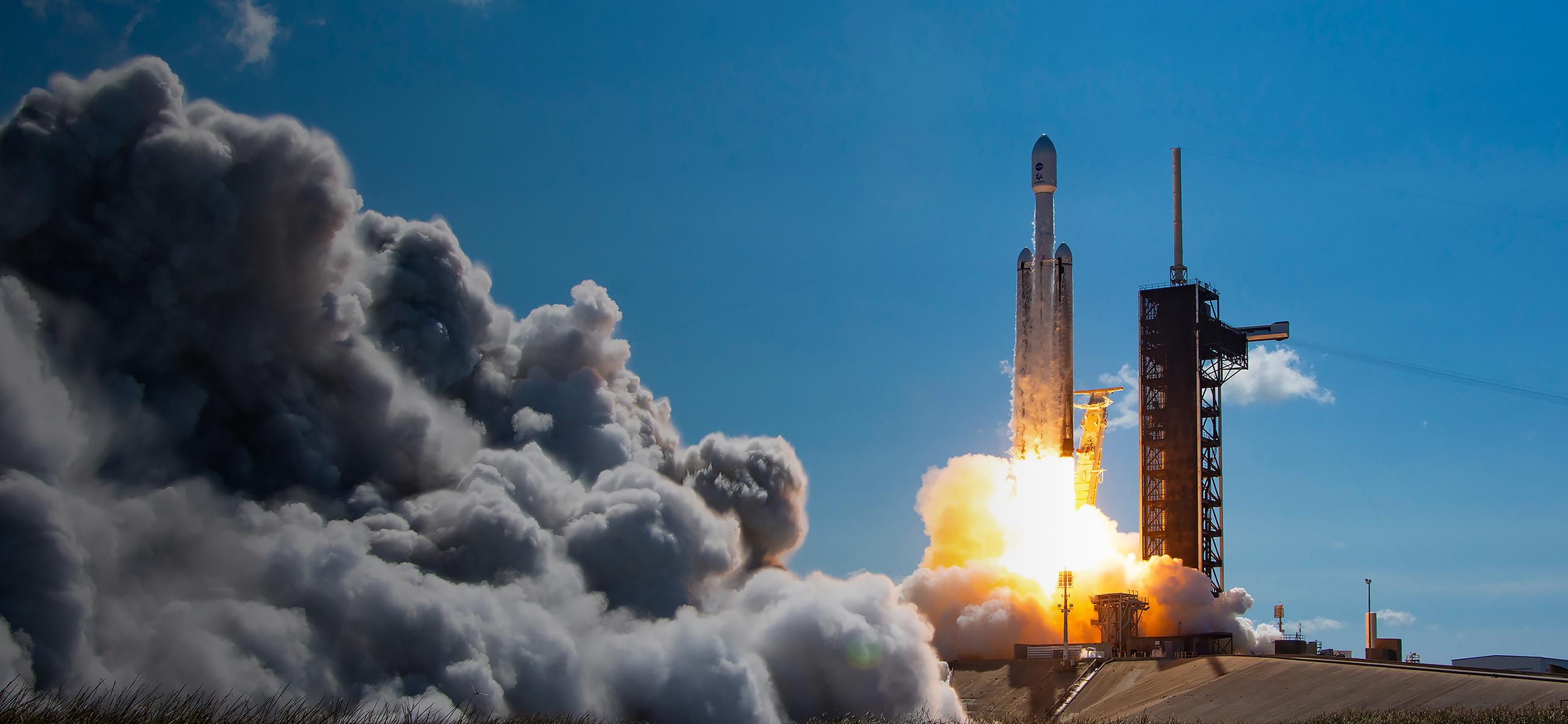
None of this vision is viable without a launch system capable of carrying extremely large, heavy payloads at low cost. For SpaceX, that system is Starship. The scale and economics of orbital AI data centers are tightly coupled to Starship’s promised capabilities: massive payload capacity, rapid reusability, and dramatically lower launch costs per kilogram.
Current designs for AI-focused orbital platforms are optimized around Starship’s dimensions and lift capacity. However, Starship remains in an extended testing phase. While multiple test flights have taken place over the past few years, the vehicle has not yet entered routine commercial service or carried operational payloads. Progress on upcoming test missions will be closely watched, as the success or delay of Starship directly affects the feasibility and timeline of space-based AI infrastructure.
Building AI data centers in orbit is not merely a technical challenge — it is a financial one. Estimates suggest that deploying meaningful AI computing capacity in space would require tens of billions of dollars in capital. Even for SpaceX, funding such an effort internally would be difficult without accessing public markets.
This capital intensity helps explain why SpaceX, long resistant to an initial public offering, is now actively evaluating that option. An IPO would provide the scale of funding needed to support orbital infrastructure development while also offering liquidity for existing shareholders. According to people familiar with internal discussions, space-based AI computing has become one of the strategic considerations driving renewed IPO planning.
Orbital AI infrastructure could also deepen the connection between SpaceX and Elon Musk’s broader AI ambitions. Musk’s AI company, xAI, currently trails major competitors such as OpenAI and Google in both revenue and user adoption. Access to proprietary, space-based computing resources could offer a long-term strategic advantage by reducing dependence on terrestrial cloud providers and enabling tighter integration between hardware, infrastructure, and AI models.
Viewed together, the pieces suggest a vertically integrated ecosystem: SpaceX provides launch capability and orbital infrastructure, satellite networks deliver connectivity, and AI models operate on computing resources beyond Earth’s surface. While still speculative, this vision illustrates how space and artificial intelligence are increasingly intertwined in the strategic planning of next-generation technology companies.
https://www.wsj.com/tech/why-elon-musk-is-racing-to-take-spacex-public-38f3de9b