Transforming Tomorrow: How AI Revolutionizes the Supply Chain
– 4 min read

The future of supply chains is unfolding before our eyes, hailing a revolutionary era where artificial intelligence dramatically enhances clarity and efficiency. Imagine every link in the supply chain as interconnected threads weaving a vast tapestry that was once too intricate to fully comprehend. Today, however, AI is unraveling this complexity by providing an unprecedented all-encompassing view of operations.
The global market for Supply Chain AI is expected to soar, with a growth rate over 30% year-on-year until 2030. But what does this mean for businesses? It means AI is becoming a crucial ally in understanding the mega process of supply chains. AI integrates data from numerous micro processes, creating a 'digital twin,' a precise, virtual replica of the entire supply chain. This allows companies to see the whole picture—what's really happening in real-time.
This newfound visibility is transformative. Consider the leading agricultural technology company that, after establishing a digital twin, swiftly identified and corrected flaws in its master data, averting over 2,000 production halts in three short months. Such insights not only improve efficiency but also enhance the organization's ability to meet Environmental, Social, and Governance (ESG) objectives, enabling ethical sourcing strategies and optimizing logistics for reduced emissions and costs.
In today's rapidly evolving business landscape, resilience isn't just about bouncing back from disruptions; it's about forging an unbreakable supply chain that anticipates challenges before they arise. Enter AI, the game-changer turning traditional notions of supply chain security on their head. Supply Chain leaders empowered by AI and generative AI are no longer just reacting to hiccups—they're proactively guarding against them.
These technologies offer a crystal-clear view into the future, simulating the impacts of potential disruptions, be it a far-reaching natural disaster or sudden shifts in trade tariffs. Imagine a Supply Chain manager staring down a daunting new tariff. With the help of AI, they can map out which routes and suppliers will feel the crunch, explore alternative options, and even estimate the financial and temporal toll of these alternatives. It's like having a strategic playbook tailored to any curveball the world throws at you.
Imagine a global supply chain that operates like a well-oiled machine—free from the shackles of excess inventory and the hassles of stock-outs. It's not just a pipe dream; with Artificial Intelligence, it's becoming a reality. AI's prowess in analyzing a diverse range of data inputs—such as market trends, weather conditions, competitor pricing, and supplier performance—paves the way for more accurate demand forecasting and smarter planning.
AI works tirelessly to decode the immense data streams emanating from today's sensor-rich supply chains, enabling companies to make informed decisions. This AI-enhanced approach to demand forecasting and inventory management not only streamlines operations but also opens up possibilities for preemptive action, setting the stage for a new era in supply chain excellence.
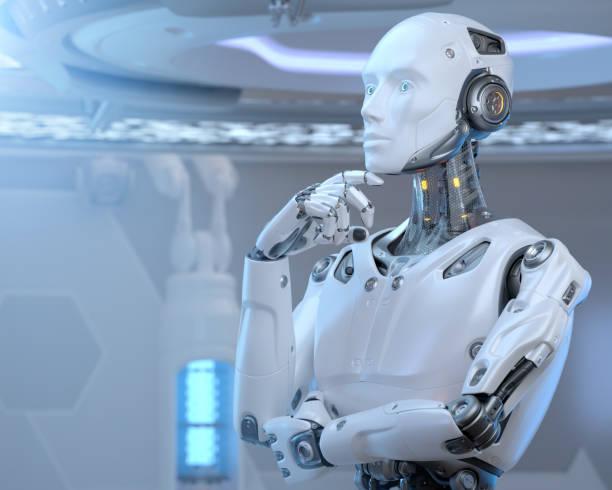
Imagine a bustling world where warehouses resemble futuristic arenas of efficiency, robots whizzing around doing what humans struggled with manually for years. Almost half of the Supply Chain leaders in recent surveys are already embedding AI deep within their warehouse operations. Yet, that's just scratching the surface of what we call hyperautomation.
The concept transcends beyond automated warehouses. From procurement to order management, AI and generative AI are taking over monotonous, repetitive tasks, freeing humans to focus on strategic initiatives. AI Agents are leading procurement teams into a new era by promptly responding to supplier inquiries, clearing backlogs, and fostering collaborative relationships with suppliers.
Moreover, AI is helping to discern which blocked customer orders should proceed, ensuring cash flow remains uninterrupted. This not only speeds up processes but also allows credit managers to be more productive. Let's not forget automated stock management. AI is taking charge by autonomously ordering when inventory levels fall below threshold levels, ensuring uninterrupted production flows. The technology is also employing fuzzy matching to streamline operations by identifying duplicate records across suppliers, master data, and customers.
Gartner casts a striking prediction: within five years, half of the cross-functional supply chain management solutions will wield intelligent agents to independently execute decisions. It's a vision of an AI-enabled, hyperautomated, autonomous supply chain that's rapidly becoming reality and altering landscapes as it arrives.
Artificial Intelligence is revolutionizing supply chains by transforming once-invisible processes into visible, manageable actions that empower leaders to proactively shape operations. Imagine having a clear, panoramic view of every step in the supply chain—it's a game-changer that allows companies to bend reality to their will and transform their operations from reactive crisis management to strategic proactivity.
The age of supply chain hyperautomation is unfolding, powering a shift that positions companies at the cutting edge of efficiency and competitive advantage. It's a bold new frontier where AI doesn't just assist; it redefines the very core of supply chain management. This technological revolution matters for businesses because it transforms supply chains from reactive entities to proactive strategists, positioning Supply Chain managers not just as operational thinkers but as strategic pioneers in an increasingly complex global marketplace.
AI-driven supply chain visibility is setting a new standard: quick problem-solving, strategic operational transparency, and impactful environmental stewardship. This is more than just progress; it's a profound shift that promises to redefine industry norms for years to come, creating an ecosystem where intelligent automation drives unprecedented levels of efficiency and strategic insight.
 Marion Koob