Tesla Targets Public Launch of Optimus Humanoid Robots by Late 2027
– 3 min read
Tesla Optimus: The Future of Humanoid Robotics
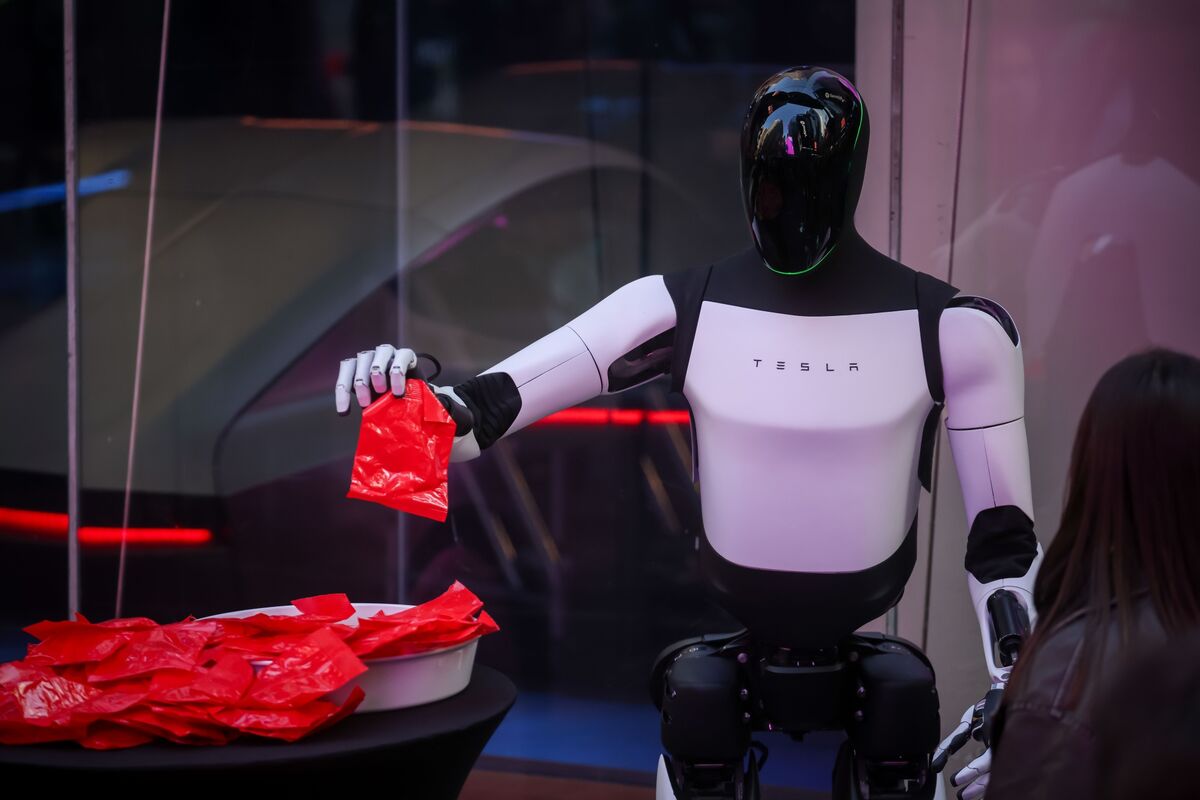
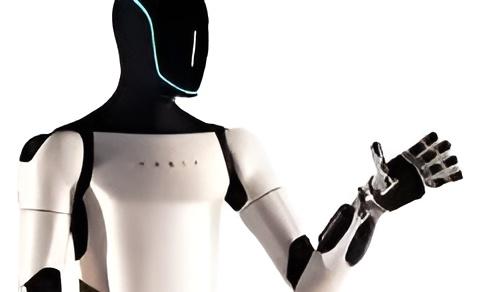
Tesla’s humanoid robot, Optimus, is being positioned as the company’s next major product category, with Elon Musk indicating that public availability could begin by late 2027. The timeline marks a shift from prototype demonstrations toward a defined commercialization plan. Early versions of Optimus are currently operating inside Tesla factories, where they perform simple, repetitive tasks as part of structured internal testing. This deployment allows Tesla to collect operational data in real-world industrial environments while refining hardware and software systems. By the end of 2026, Musk has stated that Optimus is expected to handle more advanced tasks requiring greater coordination and environmental awareness, representing a transition from controlled factory assistance to broader functional capability.
Invest in top private AI companies before IPO, via a Swiss platform:
 SmartProfit Finder AG
Safety and Reliability Standards
Before Optimus is offered to consumers, Tesla has outlined three core conditions: high safety standards, high reliability, and broad functional capability. These criteria are intended to ensure that the system performs consistently outside controlled environments. Safety remains a central requirement, particularly because a humanoid robot operates in close proximity to people and objects. Tesla’s development approach focuses on minimizing operational errors, strengthening perception systems, and implementing fail-safe mechanisms suitable for dynamic environments. Reliability is equally critical, as Optimus is expected to function consistently over extended periods without frequent manual intervention. Tesla’s internal factory testing is designed to expose mechanical and software limitations before broader deployment. Functionality represents the third pillar: beyond basic movement, the robot must demonstrate the ability to carry, manipulate, and interact with objects in varied settings to justify commercial release.
Integration with Tesla's AI and Autonomous Vehicle Technology
Optimus is being developed using elements of Tesla’s existing artificial intelligence infrastructure, including systems originally designed for autonomous driving. The company leverages experience in computer vision, sensor fusion, and real-world AI training to support robotic mobility and object interaction. This integration reflects Tesla’s broader positioning as an AI-driven engineering company rather than solely an automotive manufacturer. Advances in perception and decision-making software for vehicles are being adapted for humanoid robotics, creating technical overlap between autonomous transport and physical automation systems. Tesla has indicated that robotics, artificial intelligence, and autonomy will form interconnected components of its long-term strategy.
Market Context and Business Implications
The development of Optimus coincides with challenges in Tesla’s core electric vehicle business, including two consecutive years of declining vehicle deliveries and increased competitive pressure. In this context, humanoid robotics represents a potential diversification of revenue streams and a longer-term growth initiative. Musk has repeatedly emphasized robotics and AI as central to Tesla’s future valuation, suggesting that the company’s strategic focus extends beyond vehicle manufacturing. Investor response to Optimus updates has generally reflected interest in Tesla’s expansion into automation, though commercialization timelines and production scalability remain key variables. The roadmap outlined by Tesla follows a staged progression: internal deployment and iterative improvement, expanded task capability by late 2026, and potential public sales in 2027, contingent upon meeting defined safety, reliability, and performance benchmarks.
 Edward Ludlow