NVIDIA Ising: Open-Source AI Models to Supercharge Quantum Computing
– 3 min read
NVIDIA Ising: Quantum Computing Revolution
NVIDIA Ising: Open-Source Quantum AI That Transforms Fragile Qubits into Industrial Workhorses
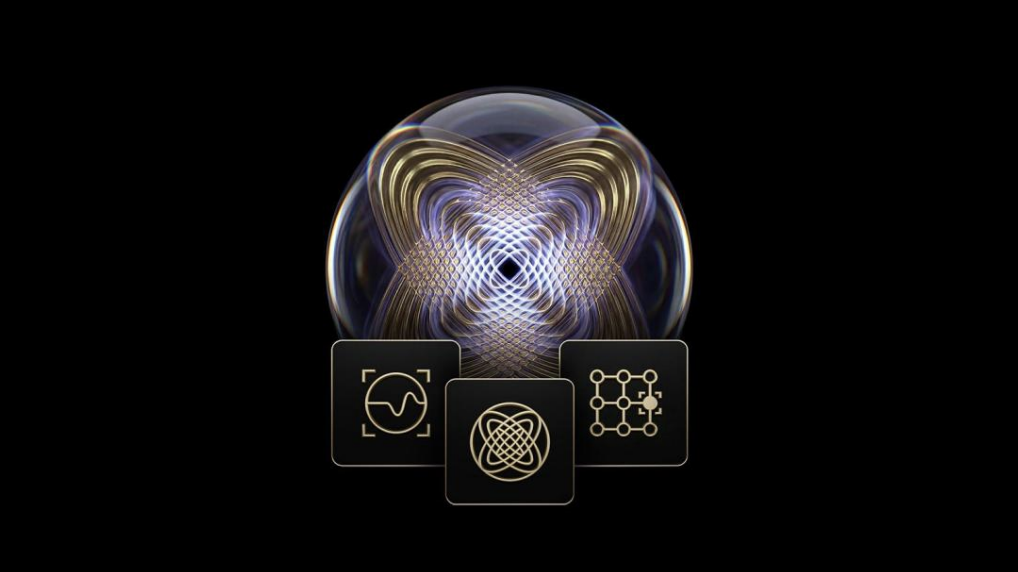
NVIDIA Ising represents a significant advancement in the application of artificial intelligence to quantum computing, introducing a family of open-source models designed to address two of the field’s core challenges: calibration and error correction. While quantum processors offer substantial theoretical capabilities, their practical use remains constrained by qubit instability and sensitivity to environmental noise. As a result, researchers often spend extensive time calibrating systems and managing error rates during operation.
Invest in top private AI companies before IPO, via a Swiss platform:
 SmartProfit Finder AG
Ising addresses these limitations by positioning AI as a control layer for quantum hardware, improving stability and operational efficiency. Rather than functioning as a standalone tool, the framework acts as a control plane that continuously monitors and adjusts system performance. This approach enables quantum systems to move closer to reliable, repeatable operation and supports integration with GPU-based computing environments, reflecting a broader shift toward hybrid quantum-classical architectures.
Revolutionary Performance Improvements Through AI Integration
The Ising models deliver measurable performance gains, including up to 2.5 times faster error correction decoding and approximately threefold improvements in accuracy compared to conventional methods. In addition, automated calibration workflows can reduce setup time from days to hours. These improvements increase the proportion of time quantum systems can dedicate to computation rather than maintenance, enhancing overall system utilization and experimental throughput.
Core Components: Ising Calibration and Ising Decoding Systems
Ising Calibration: Advanced AI-Driven Hardware Optimization
Calibration in quantum systems requires precise tuning of qubits under constantly changing conditions. Ising Calibration applies vision-language models to interpret measurement data and determine optimal system adjustments automatically. This reduces reliance on manual intervention and enables continuous, AI-driven calibration processes, shortening setup cycles and improving consistency across experiments.
Ising Decoding: Next-Generation Error Correction Technology
Error correction remains a central challenge in quantum computing due to the fragile nature of qubits. Ising Decoding uses advanced neural network architectures to analyze error patterns and improve correction accuracy. By increasing both speed and precision, the system supports more reliable computations and allows quantum processors to handle more complex workloads without proportional increases in error rates.
Open-Source Strategy: Democratizing Quantum Development
A key feature of NVIDIA Ising is its open-source design, which allows developers, enterprises, and research institutions to adapt the models to specific use cases. This approach accelerates innovation across the quantum ecosystem by enabling collaboration and reducing barriers to entry. It also positions NVIDIA as a platform provider supporting broader adoption rather than limiting development to proprietary environments.
Comprehensive Ecosystem Integration
The Ising framework integrates with NVIDIA’s broader computing stack, enabling cooperation between quantum processors and GPU-based systems. This hybrid model reflects an emerging industry direction in which quantum computing complements, rather than replaces, classical infrastructure. Early adoption by research institutions and quantum-focused companies suggests growing interest in AI-assisted quantum system management.
Market Impact and Future Implications
The development of NVIDIA Ising reflects a broader shift in the quantum computing landscape, where software and AI-driven optimization play an increasingly central role alongside hardware innovation. With the market projected to exceed $11 billion by 2030, improving the usability of current-generation systems may accelerate the timeline for practical applications. In parallel with efforts by companies such as IBM and Google to advance quantum hardware, NVIDIA’s approach focuses on maximizing the performance of existing systems, positioning AI as a key enabler in bridging the gap between experimental research and commercially viable quantum computing.
 Matt Swayne