Intergalactic AI Revolution: Google & SpaceX Forge Space-Based Datacenters, Nvidia Hits $5 Trillion in the Race to Power the Future
– 4 min read
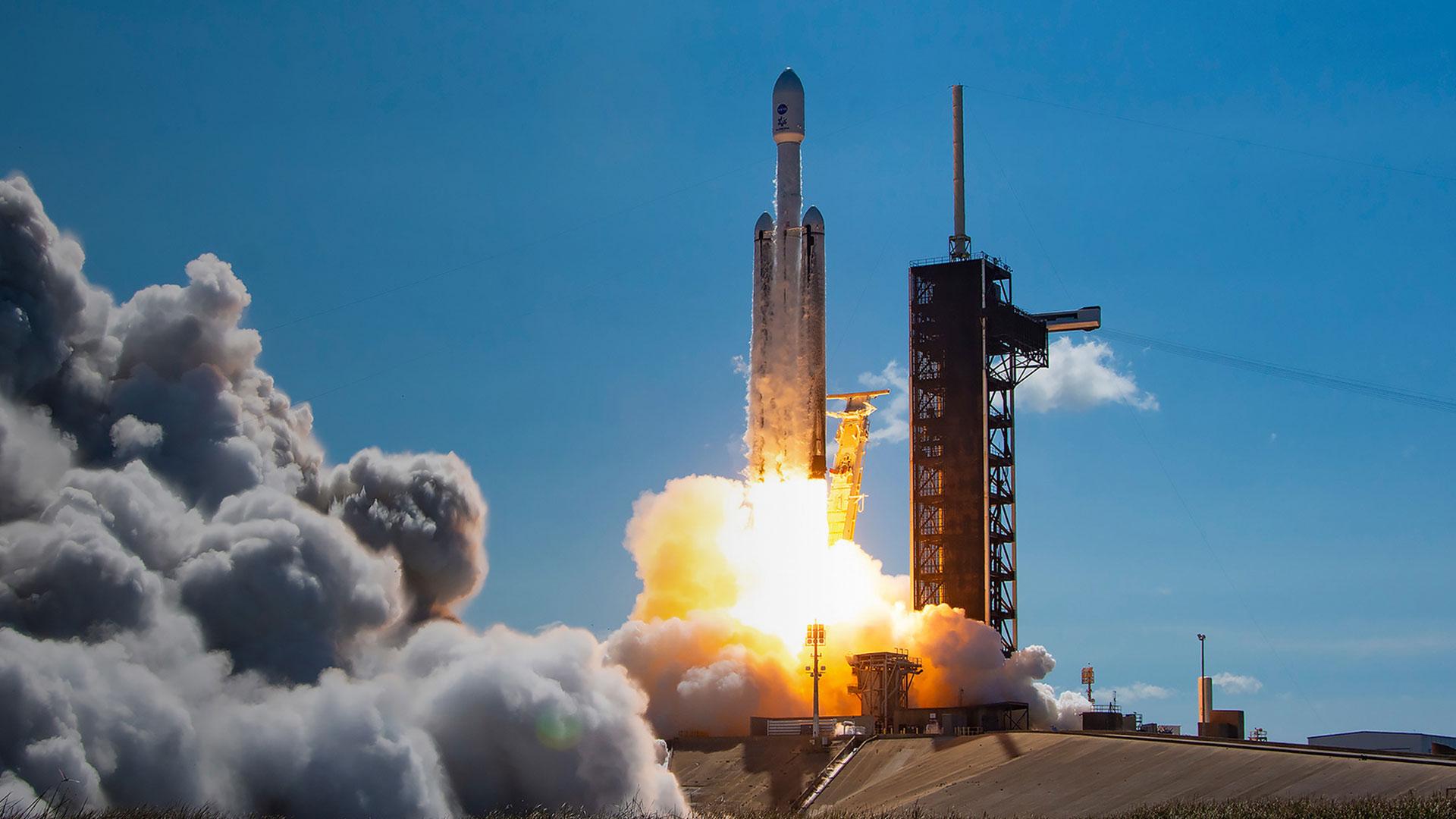
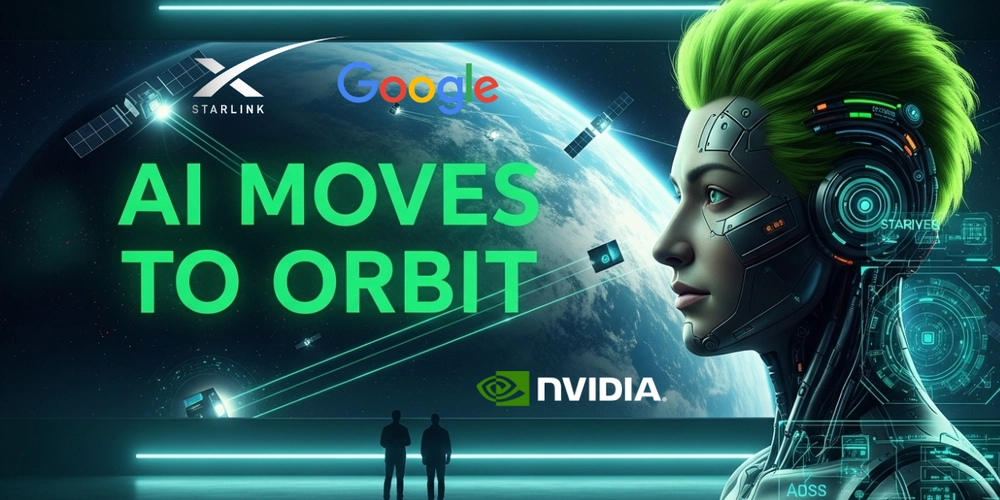
The veil of the cosmos is lifting to reveal a spectacular stage for one of humanity's most ambitious technological pursuits: AI datacenters in space. This innovative venture took a historical turn on November 4th, 2025, when Google CEO Sundar Pichai unveiled Project Suncatcher: the world's first AI datacenter orbiting the Earth, entirely powered by solar energy.
Not one to be left behind, Elon Musk quickly upped the ante with SpaceX's ambition to transform Starlink V3 satellites into AI-enabled orbital computing hubs. This isn't just a tech race; it's a monumental shift toward a future where computation ascends beyond Earth's boundaries, creating a distributed AI compute layer floating serenely above us, free from cooling costs and power restrictions.
Amidst the cosmic clamor, Nvidia stealthily ascended to become the world's most valuable tech titan, breaking the $5 trillion valuation barrier. With strategic investments like a $1 billion stake in Nokia, triggering a 22% stock rise, and a $5 billion move into Intel, marking its best trading day in nearly four decades, Nvidia isn't merely selling GPUs—it's crafting the infrastructure of a global compute economy. The launch of Nvidia Aerial, a 6G AI-native wireless network, secured $500 billion in AI chip orders, positioning the company as the silent colossus building the essentials that will run Earth and potentially beyond.
In typical bold fashion, SpaceX, spearheaded by Musk, acquired wireless spectrum from EchoStar for a staggering $17 billion. This acquisition turbocharges Starlink Direct-to-Cell, poised to connect over 6 million users by 2025 and directly challenge telecom behemoths like AT&T, Verizon, and T-Mobile. Imagine a Starlink network doubling as a distributed AI compute layer in orbit, unrestrained by cooling and power limitations, powered solely by the sun. This bold maneuver doesn't just threaten traditional telecommunications—it establishes the foundation for space-borne computational networks that could redefine global connectivity.
Google's Project Suncatcher, in collaboration with Planet Labs, aims to deploy AI datacenters in space by 2027. By tapping into the limitless potential of solar energy and utilizing the natural cooling of space's vacuum, Google plans to transcend Earth's power grid limitations that stifle global data expansion. These orbital facilities represent more than technological advancement—they're a giant leap toward redefining who controls the digital infrastructure of tomorrow, breaking free from terrestrial constraints and bringing us into an era where computational power is as vast and untethered as the cosmos itself.
As Microsoft CEO Satya Nadella surprisingly noted, "Many datacenters are sitting idle because there isn't enough electricity." In places like Virginia, datacenters consume 26% of the state's power. The next era of innovation hinges not on more GPUs but on harnessing more power. While the world eyes the stars, this terrestrial crisis brews beneath, demanding creativity beyond conventional boundaries. Project Suncatcher stands to address this critical power bottleneck, offering a solution that could redefine how we understand computing capacity and efficiency.
China isn't sitting idle in this interstellar transformation. In a bold counter-move, Huawei unveiled the Atlas 950 SuperCluster, boasting 6.7 times the power of Nvidia's NVL144. With plans to produce 300,000 AI chips by 2025, the arena has morphed from corporate rivalry into a geopolitical showdown over computation supremacy. This isn't merely corporate spectacle—it's a strategic computation armament at the state level, where nations compete to configure and command the platform running the world's intelligence.
In the background of this cosmic race, Tesla's AI5 chip, now 40 times faster than its predecessor, is setting the pace for vehicles, robotics, and production floors. Tesla's plans extend far beyond automobiles, forging a neural network infrastructure pivotal to future civilizations. This represents another dimension of the technological tapestry being woven with orbital connectivity and infinite power resources.
This decade belongs not merely to those who build better chips or launch groundbreaking satellites, but to those who seize control of the compute, connectivity, and limitless power of the orbital stratum. The technological tapestry—woven with orbital connectivity and infinite power resources—frames a new age where leaders won't just dominate in hardware but will orchestrate the very platform that governs worldly and cosmic intelligence. The stage is set for a new era where the sky is no longer the limit, and the race to harness power beyond our atmosphere will determine who controls the digital future of humanity.
 AI VANGUARD