Humanoid Robots Move From Lab Experiments to Real Warehouse Jobs
– 3 min read

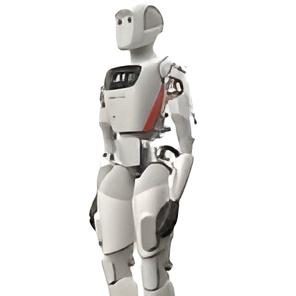
Warehouse operators are beginning to test humanoid robots in live operational environments, marking a shift from laboratory experimentation toward limited commercial use. In Flowery Branch, Georgia, humanoid robots known as Digit, developed by Agility Robotics, are being deployed inside an active warehouse, where they transport bins of shapewear between storage areas and conveyor belts—tasks traditionally performed by human workers.
Invest in top private AI companies before IPO, via a Swiss platform:
 SmartProfit Finder AG
Industry participants note that while warehouses already rely heavily on automation such as conveyor systems, robotic arms, and autonomous wheeled vehicles, these machines are typically designed for narrowly defined, fixed tasks. Humanoid robots are being evaluated as a more flexible layer of automation, capable of operating in multiple locations within existing facilities rather than remaining confined to a single workstation.
For many years, humanoid robots were widely viewed within the industry as impractical for commercial deployment. High costs, limited durability, relatively slow task execution, and lower efficiency compared with specialized machines made them difficult to justify economically. Compared with fixed robotic arms or wheeled robots, bipedal systems were often seen as introducing unnecessary mechanical complexity.
Several technological and economic developments are now prompting companies to reassess those assumptions.
One key factor is that most warehouses and factories are designed around human movement and proportions. Stairs, shelving heights, narrow aisles, doorways, and tools are optimized for human workers. A humanoid robot can operate within this infrastructure without requiring extensive facility redesign, whereas other robotic systems may need ramps, altered layouts, or new equipment to function effectively.
As a result, multiple robotics companies are now conducting pilot programs in active warehouses and factories rather than confined testing environments. At GXO Logistics, where Digit robots are undergoing trials, automation executives describe the systems as early examples of machines capable of shifting between different tasks over the course of a workday. In theory, a single robot could perform unloading, picking, and loading functions at different times, depending on operational needs.
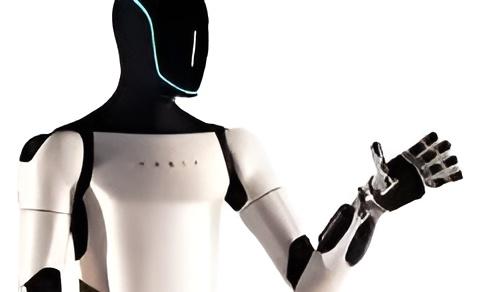
From an economic standpoint, this task flexibility is central to the business case. Although humanoid robots require significant upfront investment, companies argue that a machine capable of handling multiple roles over extended operating hours may deliver better long-term value than single-purpose automation. Executives at firms such as Apptronik have emphasized that affordability and scalability remain critical priorities as the industry seeks to move beyond small, specialized deployments.
Advances in hardware alone do not account for the renewed interest in humanoid robots. Progress in artificial intelligence and control software has played a significant role. Technology companies and AI developers are adapting machine-learning techniques—originally developed for data analysis and language models—to help robots perceive their surroundings, plan actions, and adjust movements based on experience.
Instead of relying solely on rigid, rule-based programming, modern humanoid robots increasingly use learning-based systems to refine balance, navigation, and object handling. Robotics companies such as Boston Dynamics have gradually shifted toward these approaches, enabling robots to respond more effectively to variability in real-world environments, including uneven floors, shifting loads, and unexpected human activity.
Despite these advances, deployment remains cautious and limited in scale. At the Spanx warehouse, only two Digit robots are currently operating, while most logistics work continues to rely on a mix of human labor, conveyor systems, robotic arms, and wheeled robots. Industry analysts generally expect future warehouses to feature a combination of robotic systems rather than a single dominant design.
Some experts suggest that long-term success will depend less on whether robots resemble humans and more on their ability to operate safely and reliably in spaces designed for people. Key questions include whether robots can reason about tasks, adapt to unexpected conditions, and work alongside human employees without introducing new risks.
At present, humanoid robots occupy an intermediate position: no longer confined solely to research projects, but not yet widely deployed across commercial operations. Their use in active warehouses represents an incremental step rather than a full transformation, reflecting a broader industry approach that emphasizes gradual integration, continued testing, and close evaluation of economic and operational performance.
https://www.wsj.com/tech/ai/humanoid-robot-workers-ai-brain-08027439