Humanoid Robot Digit Proves Its Worth: 100,000 Totes Moved in Real-World GXO Warehouse
– 3 min read
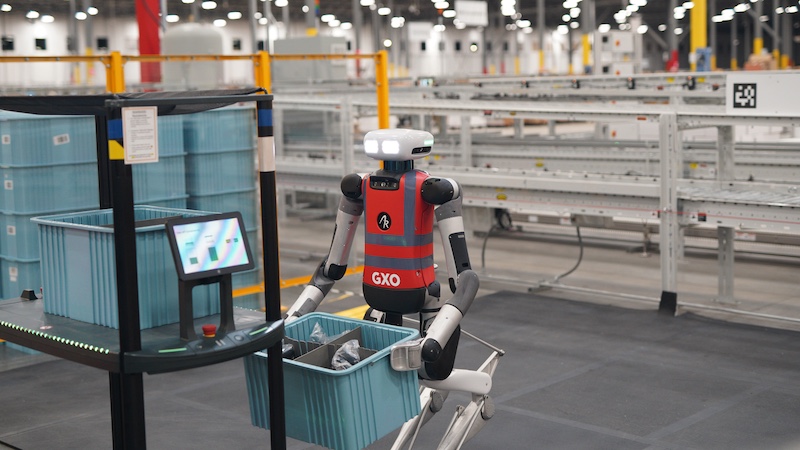
Agility Robotics has achieved a striking milestone with their humanoid robot, Digit, which has moved more than 100,000 totes in a real, working warehouse operated by GXO Logistics in Flowery Branch, Georgia. This represents a significant breakthrough in practical robotics, moving beyond laboratory demonstrations to real-world industrial applications where robots operate alongside existing warehouse systems and human workers in live fulfillment workflows.
 Smartprofit Finder AG
The achievement addresses the fundamental question that has surrounded humanoid robotics for years: can these machines truly handle the demanding, repetitive nature of industrial work? Agility Robotics has consistently argued that meaningful validation can only come from performance over thousands of cycles in messy, unpredictable environments. The 100,000-tote milestone serves as concrete evidence that humanoid robots are transitioning from science fiction concepts into practical industrial tools.
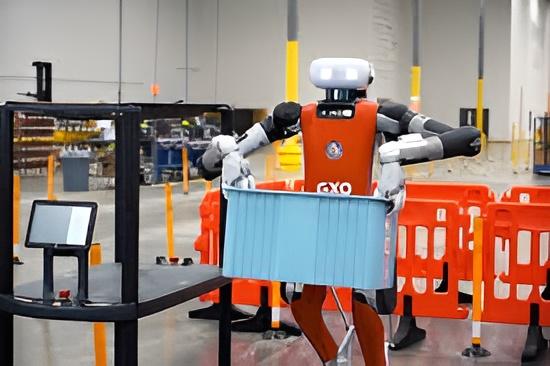
Within the GXO facility, Digit functions as a general-purpose humanoid, designed to move and handle objects in spaces originally built for people rather than machines. The robot performs multiple unrelated tasks throughout the fulfillment workflow, including picking totes on and off autonomous mobile robots, loading items onto conveyors, and stacking containers at different heights and locations. This versatility demonstrates that Digit can be reassigned across different jobs as workflows evolve, providing the kind of flexible automation that modern logistics operations desperately need.
The growing demand for this type of scalable warehouse automation stems from the double pressure facing logistics operators: rising order volumes combined with persistent labor shortages. Traditional automation systems, while helpful, are often rigid and designed for single, repetitive tasks. The warehouse industry needs automation that can be scaled and reassigned to new tasks as conditions change, making humanoid robots like Digit particularly valuable for facilities under constant pressure to do more with less.
Digit's success relies on a sophisticated blend of advanced techniques that enable it to learn skills capable of surviving the transition from controlled simulations to chaotic real-world conditions. The training approach combines traditional control methods that provide mathematical stability and safety guardrails, teleoperated demonstrations where human operators show the robot proper task execution, reinforcement learning that allows Digit to practice and refine behaviors through trial and reward systems, and rich simulation environments that expose the robot to thousands of scenarios before deployment.
The robot's performance showcases practical artificial intelligence in action, moving beyond buzzwords to deliver tangible results in demanding physical tasks. Digit's AI enables dynamic balancing, allowing it to stay upright and stable while navigating uneven floors, handling heavy or awkwardly placed totes, and working around moving equipment and human colleagues. Equally important is the robot's vision accuracy, which enables it to identify and grasp objects thousands of times under varying lighting conditions, different placement angles, and constantly changing backgrounds.
These capabilities are tested continuously in the unpredictable environment of a live warehouse, where no two pickups are identical and conditions constantly shift. Digit must recognize objects in different positions and orientations, adapt to changing lighting throughout the day, navigate around obstacles and moving equipment, and maintain precise grasping despite variations in object placement. The robot accomplishes this while performing multiple jobs in the same facility, demonstrating the kind of general-purpose capability that allows it to function as a flexible teammate rather than a single-purpose machine.
By crossing the 100,000-tote threshold in a real GXO operation, Digit has proven that advanced AI can work reliably in the fast-paced, unpredictable world of modern warehousing. This milestone represents more than just an impressive number; it validates that humanoid robotics technology has matured to the point where these machines can serve as industrial-grade teammates, sharing workloads in modern logistics centers and fundamentally changing the rules of warehouse automation.
 David Edwards