Harmattan AI Hits $1.4bn Valuation as Dassault Backs $200m AI-Defense Expansion
– 4 min read

Harmattan AI Defense Technology Analysis
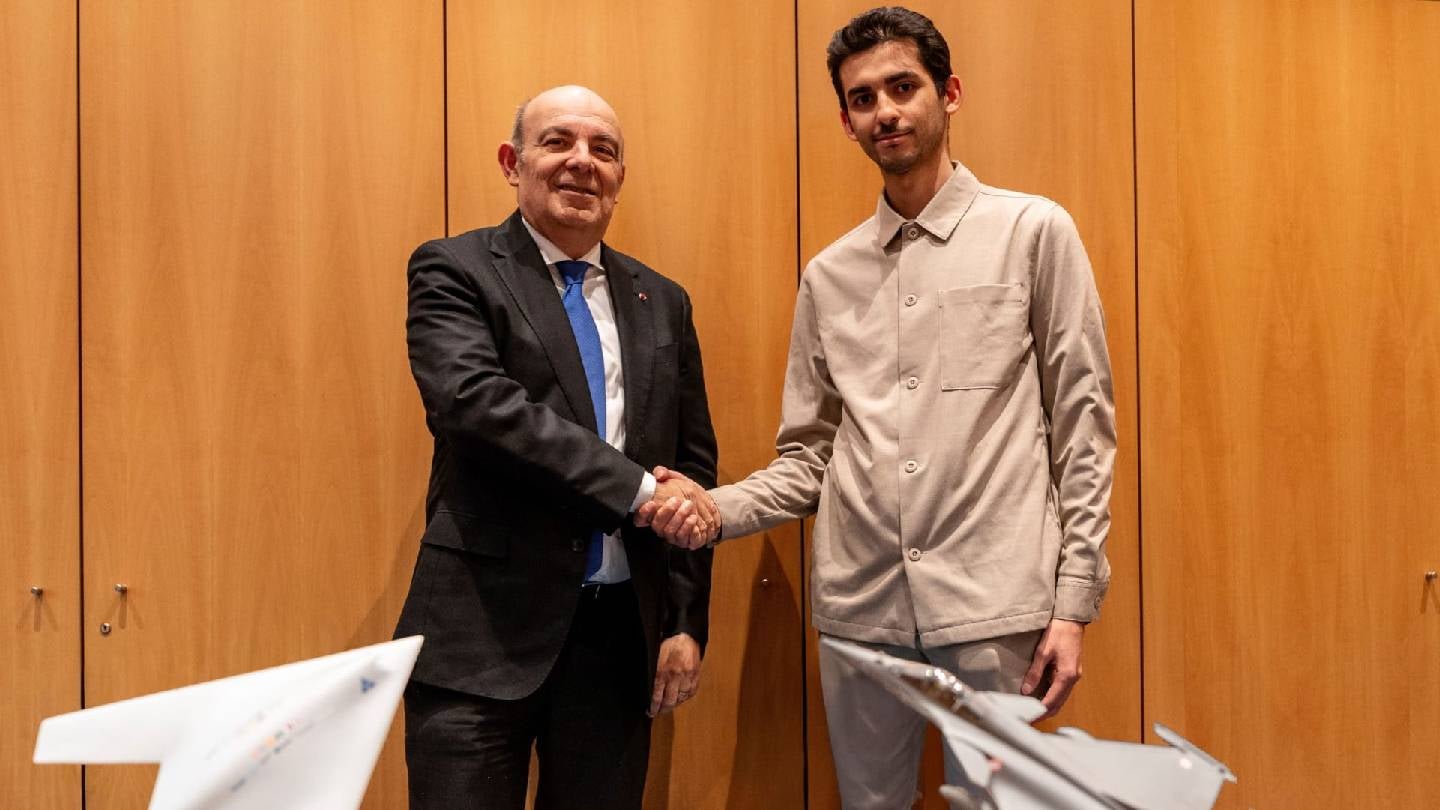
Harmattan AI has closed a $200 million Series B funding round, lifting its valuation to approximately $1.4 billion. For a defense-focused artificial intelligence company founded in 2024, reaching unicorn status at this stage highlights the growing investor interest in AI-enabled military technologies and next-generation defense systems.
Invest in top private AI companies before IPO, via a Swiss platform:
 SmartProfit Finder AG
The funding round is led by Dassault Aviation, a major player in aerospace and defense. Beyond capital, the investment reflects a strategic alignment, positioning Harmattan AI as a technology partner for future combat systems rather than a standalone software supplier.
The newly raised capital is allocated to three main areas: expanding AI-enabled defense platforms, scaling production of intelligence, surveillance, and reconnaissance (ISR) systems, and integrating controlled autonomy into combat aviation. The financing underpins a broader partnership between Harmattan AI and Dassault Aviation, supporting the gradual integration of Harmattan’s AI technologies into future combat aircraft programs, including the Rafale F5 and selected uncrewed aerial platforms.
The partnership between Harmattan AI and Dassault Aviation signals a shift toward deeper AI integration in combat aviation. Dassault, best known for the Rafale fighter jet, brings decades of experience in aircraft design and certification, while Harmattan contributes AI-driven autonomy and decision-support systems.
The collaboration focuses on combining Harmattan AI’s software capabilities with Dassault’s aircraft platforms to enable faster data processing, improved situational awareness, and assisted decision-making under human supervision. The objective is not full autonomy, but systems that can support pilots and operators in complex operational environments.
Central to the partnership is the concept of “controlled autonomy” and “monitored AI,” where aircraft and drones can execute predefined tasks independently while remaining within strict operational constraints and human oversight. This approach reflects current military doctrine, which prioritizes human decision authority while leveraging AI to manage speed, complexity, and data volume.
Harmattan AI is using the new funding to expand a portfolio of AI-enabled defense platforms across multiple operational domains. These include air defense, ISR, drone interception, electronic warfare, and command-and-control systems.
In ISR applications, Harmattan’s systems focus on processing large volumes of sensor and radar data in real time. AI models are trained to detect patterns, flag anomalies, and support faster threat identification, reducing reliance on manual data analysis while improving response timelines.
Drone interception is another priority area, addressing the increasing use of low-cost unmanned systems in modern conflicts. Harmattan’s AI-driven solutions are designed to detect, track, and coordinate countermeasures against hostile drones, particularly in congested or contested airspace where reaction time is critical.
Electronic warfare capabilities form a third pillar of expansion. Harmattan AI is developing systems that analyze electromagnetic signals, support electronic protection measures, and adapt countermeasures dynamically as adversaries change tactics. These tools aim to improve resilience and situational awareness across the electromagnetic spectrum.
With the Series B funding and industrial backing from Dassault Aviation, Harmattan AI is transitioning from prototype development to scaled production. This phase focuses on turning validated technologies into deployable systems that can be manufactured, maintained, and integrated at scale.
Production efforts concentrate on ISR platforms, drone interception systems, and electronic warfare solutions. The emphasis is on repeatable product lines rather than bespoke deployments, allowing defense customers to field capabilities more quickly across multiple sites and operational contexts.
Scaling ISR systems involves expanding coverage and persistence, enabling near real-time monitoring of wide operational areas. In drone defense, scaling supports the deployment of modular counter-drone systems around critical infrastructure, air bases, and forward operating locations.
Future combat aircraft, including the Rafale F5 and next-generation uncrewed aerial vehicles, are expected to operate as coordinated networks of manned and unmanned platforms supported by embedded AI systems. This represents a shift from isolated aircraft operations toward distributed, AI-assisted air combat teams.
Controlled autonomy allows aircraft to manage routine or time-sensitive tasks independently while preserving human authority over critical decisions. AI is integrated into core avionics and mission systems rather than functioning as an external add-on, enabling continuous learning from sensor data and operational feedback.
In this model, manned aircraft can act as coordination nodes, using AI to manage multiple uncrewed platforms performing reconnaissance, electronic warfare, or support missions. AI systems handle high-frequency data processing and task allocation, while pilots and commanders focus on strategy, mission objectives, and rules of engagement.
Monitored AI ensures that autonomy operates within clearly defined limits, providing recommendations and automated actions while maintaining human oversight. Rather than replacing crews, AI functions as an advanced decision-support layer that helps manage complexity and compressed timelines in modern air operations.
The integration of AI into combat aviation reflects a broader shift in air power, emphasizing information processing, coordination, and speed alongside traditional performance metrics. Harmattan AI’s partnership with Dassault positions the company to contribute to this transition as AI-enabled systems move from development into operational use.
 Jangoulun Singsit