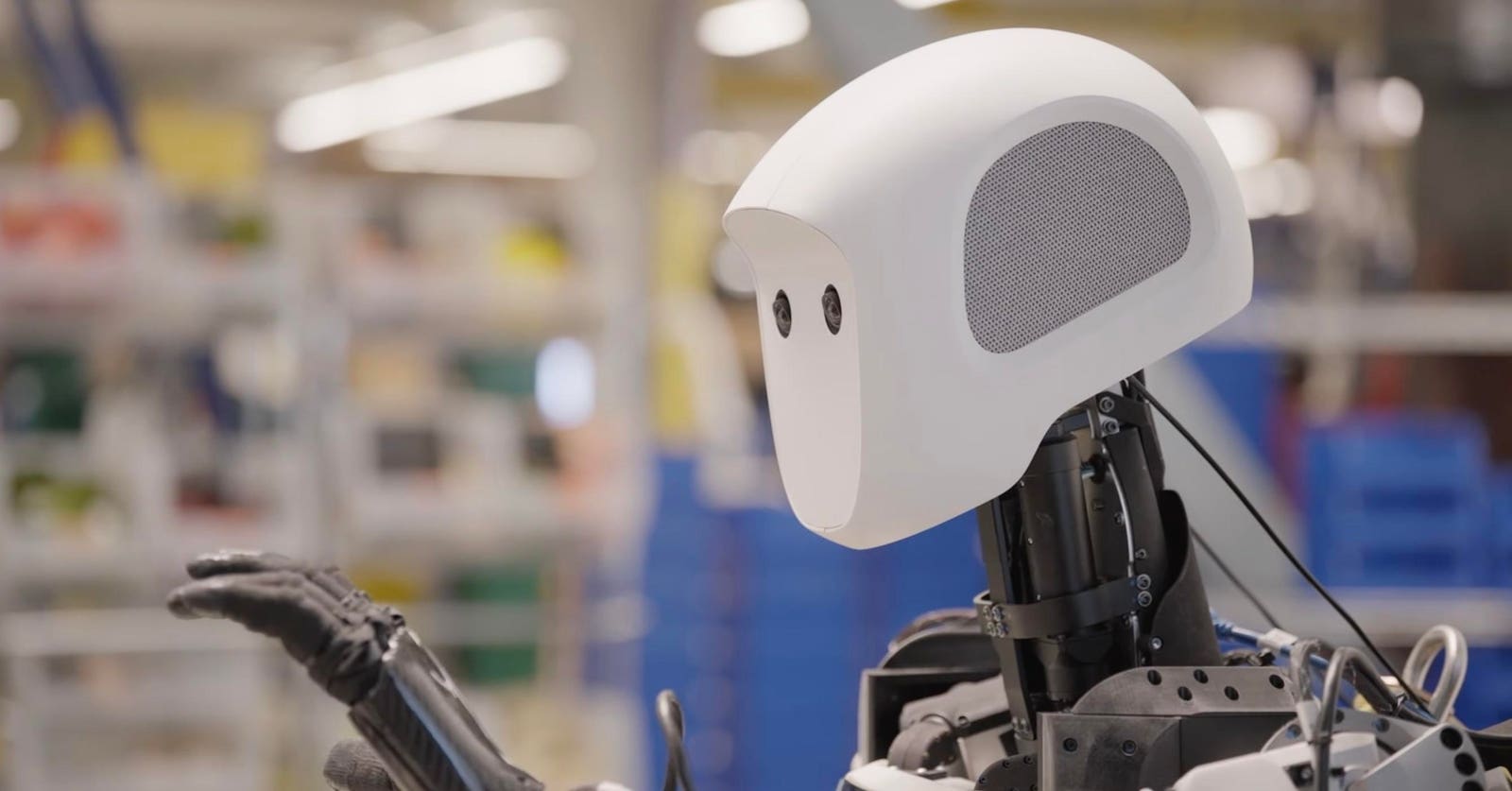
“DeepMind + Apptronik: Humanoid Robots Edge Closer to General-Purpose Home Help”
– 4 min read
Google DeepMind and Apptronik: Building the Universal Robot Worker
A pivotal moment in robotics is unfolding as Google DeepMind partners with humanoid robot maker Apptronik to develop Apollo, a human-sized robot designed as a general-purpose helper for real-world environments. The collaboration marks a shift from experimental robotics toward practical household and workplace applications, focusing on systems capable of handling everyday tasks such as putting away groceries, sorting laundry, and manipulating common objects with increasing adaptability.
Invest in top private AI companies before IPO, via a Swiss platform:
 SmartProfit Finder AG
In controlled demonstrations, Apollo performs tasks such as opening food packaging, placing items carefully into containers, sorting clothing, and handling irregular or soft objects. Crucially, the robot does not merely execute pre-programmed scripts. It reacts to changes in its environment, adjusts when objects are moved, and attempts to handle unfamiliar items—an early indication of flexible, model-driven control rather than rigid automation.
The Strategic Partnership: Hardware Meets Intelligence
The collaboration is built on a clear division of expertise: Apptronik develops the humanoid hardware platform, while Google DeepMind provides advanced artificial intelligence. Google’s investment in Apptronik supports a long-term partnership that integrates large-scale AI models—such as Gemini 3 and Gemini Robotics—into a physical robotic system. Apollo serves as the embodied platform, while Gemini Robotics functions as a generalized control system capable of adapting across different robot form factors without full retraining for each new machine.
This architecture reflects a broader shift in robotics. Traditional industrial robots operate in highly structured settings and repeat predefined movements. By contrast, model-based systems aim to interpret context, process natural language instructions, and adjust behavior dynamically—expanding robotic usefulness beyond factory floors into less predictable human environments.
Current Capabilities and Demonstrations
Demonstrations highlight several core capabilities that define the current state of Apollo’s development. The robot can interpret natural language commands such as identifying specific objects or sorting items based on categories, then plan and execute multi-step actions. It shows adaptability when interacting with unfamiliar objects, relying on visual perception and learned manipulation strategies rather than fixed routines. Apollo also demonstrates emerging dexterity in handling delicate or flexible items and sequencing tasks such as organizing groceries or loading household appliances in a logical order.
Importantly, these tasks are performed in semi-structured domestic-style environments rather than tightly controlled industrial cells. The robot navigates cluttered surfaces, distinguishes between fragile and sturdy items, and performs basic organization and handling functions. While the movements remain deliberate and cautious, the demonstrations illustrate progress toward systems capable of operating in everyday human spaces.
Technical Challenges and Current Limitations
Despite visible advances, significant technical challenges remain. Dexterity is still limited; fine motor tasks such as sealing packaging or performing high-precision manipulation require further refinement in finger control and force sensitivity. Speed is another constraint, as current motions are slower and more calculated than human equivalents, reflecting ongoing limitations in actuators, control loops, and hardware optimization.
Data efficiency also presents a structural challenge. Training robotic systems still requires extensive interaction data to master relatively simple tasks. Researchers aim to improve generalization so that robots can learn from fewer examples and transfer knowledge more effectively across tasks and environments. Safety remains a central concern, as robots intended for domestic or shared workspaces must operate predictably around people, pets, and fragile objects. Robust fail-safes, environmental awareness, and consistent performance are prerequisites for large-scale deployment.
The Universal Worker Vision
The long-term objective of the DeepMind–Apptronik collaboration is the development of a general-purpose humanoid system capable of performing a broad range of physical tasks. Unlike task-specific robots, this “universal worker” model would respond to natural language instructions, adapt to new environments with minimal retraining, perform both strength-based and delicate manipulation tasks, and function safely alongside humans.
Underlying this vision are four foundational capabilities: perception of complex, cluttered scenes; structured task planning; adaptive manipulation based on object properties; and contextual reasoning about appropriate actions. Achieving robust performance across these domains would represent a substantial expansion of what robotic systems can accomplish outside industrial settings.
Future Implications and Timeline
Progress in robotics has accelerated in recent years due to advances in large AI models, improved hardware design, and declining component costs. The DeepMind–Apptronik partnership reflects this convergence, combining embodied robotics with foundation-model intelligence to push toward more versatile machines. While current demonstrations remain early-stage and measured in pace, they suggest a trajectory toward broader real-world deployment in domains such as logistics, light industrial work, and eventually household assistance.
As hardware capabilities improve, training efficiency increases, and safety systems mature, humanoid robots like Apollo may transition from laboratory prototypes to practical tools. The timeline for widespread adoption remains uncertain, but the collaboration represents a meaningful step toward robots that can operate flexibly in the same dynamic environments humans navigate every day.
 John Koetsier