AI Giants Race to IPO Amid Soaring Compute Costs and Explosive Growth
– 3 min read
AI Computing Costs and Business Models
OpenAI and Anthropic's Runaway AI Compute Costs
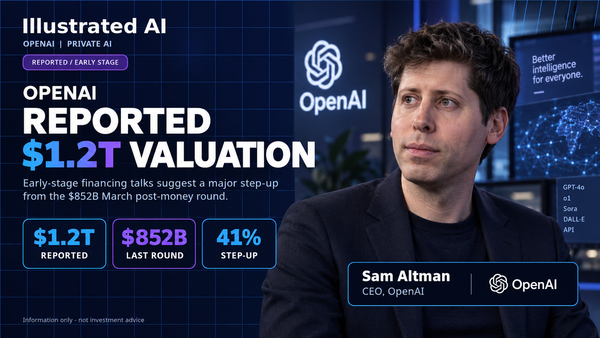
The analysis highlights a central challenge in the business models of OpenAI and Anthropic: the rapidly increasing cost of computing power required to train successive generations of artificial intelligence models. Internal projections indicate that OpenAI could spend approximately $121 billion on compute for research by 2028. Even with significant revenue growth, this level of investment could result in annual losses of around $85 billion, placing the scale of capital consumption far beyond that of most public technology companies.
Invest in top private AI companies before IPO, via a Swiss platform:
 SmartProfit Finder AG
Anthropic operates at a smaller absolute scale, but faces similar structural dynamics. Both companies are engaged in a competitive environment where improvements in model performance are directly linked to access to increasingly large computing resources. As a result, training costs continue to expand materially as a proportion of overall expenditure.
Why Training Costs Are Exploding
Developing advanced AI models requires progressively larger datasets, more complex architectures, and significantly greater computing capacity. Each new generation of models demands a step-change in infrastructure investment, reinforcing a cycle in which performance gains are tied to higher capital intensity. This dynamic has created a sustained competitive environment in which companies continuously expand compute capacity to maintain or improve model quality.
Two Profit Stories: With Compute and Without
Both OpenAI and Anthropic present two perspectives on profitability. One excludes large-scale training costs, treating them as long-term investments, and indicates that core operations can approach profitability. The second incorporates full training expenditure and reflects substantial ongoing losses. This distinction highlights that while the underlying services may be economically viable, continued investment in model development significantly delays overall profitability. OpenAI has indicated that it prioritizes growth and capability expansion over near-term earnings.
Inference Costs Add Additional Burden
Beyond training, both companies incur substantial inference costs associated with running models for user interactions. These operational expenses currently account for more than half of total revenue, creating additional pressure on margins. While efficiency improvements are expected over time, inference remains a key factor influencing near-term financial performance.
Explosive Revenue Growth Despite Costs
Despite high cost structures, both companies are experiencing strong revenue growth, with annual revenues more than doubling in some periods. Enterprise adoption is a primary driver, as organizations increasingly integrate AI into workflows such as software development, customer support, and data analysis. OpenAI maintains a large user base with a mix of free and paid users, while Anthropic focuses more heavily on enterprise clients with direct monetization.
The Investment Proposition
Potential IPO investors are effectively evaluating whether sustained increases in computing investment can translate into long-term revenue expansion and improved unit economics. The current model is characterized by high capital intensity and rapid growth, with the expectation that cost efficiencies and monetization will improve over time. These offerings represent not only equity investments in individual companies, but also broader exposure to the development of large-scale AI infrastructure, where access to compute remains a defining competitive factor.
https://www.wsj.com/tech/ai/openai-anthropic-ipo-finances-04b3cfb9